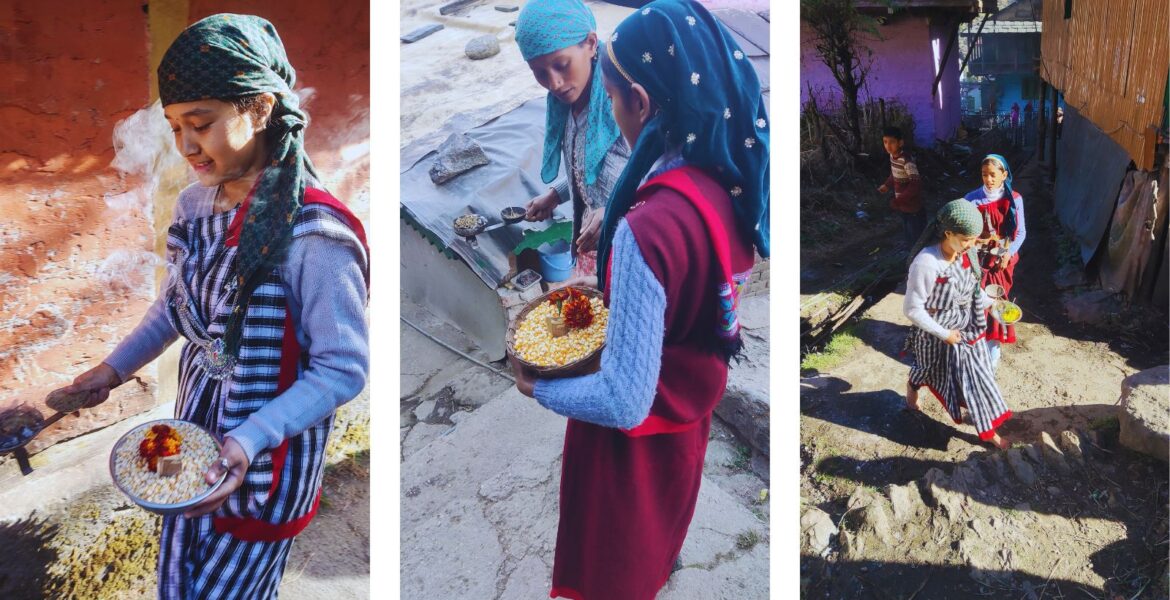
Today was one of the festive days of this season. It was the start of the new month according to the local calendar. For mainland India, today is Makar Sankranti, and in Shilha village, it is “Magh ka Saja.
Sajja or Saja is the festival like celebration that happens in the villages here at the start of a new month. The name of the new month is Magh, and today is “Magh ka saja” or “माघ का साजा”. The rituals and the ways of celebration differ for every Saja.
Jhoob Dena, AKA Halloween-Like Ritual
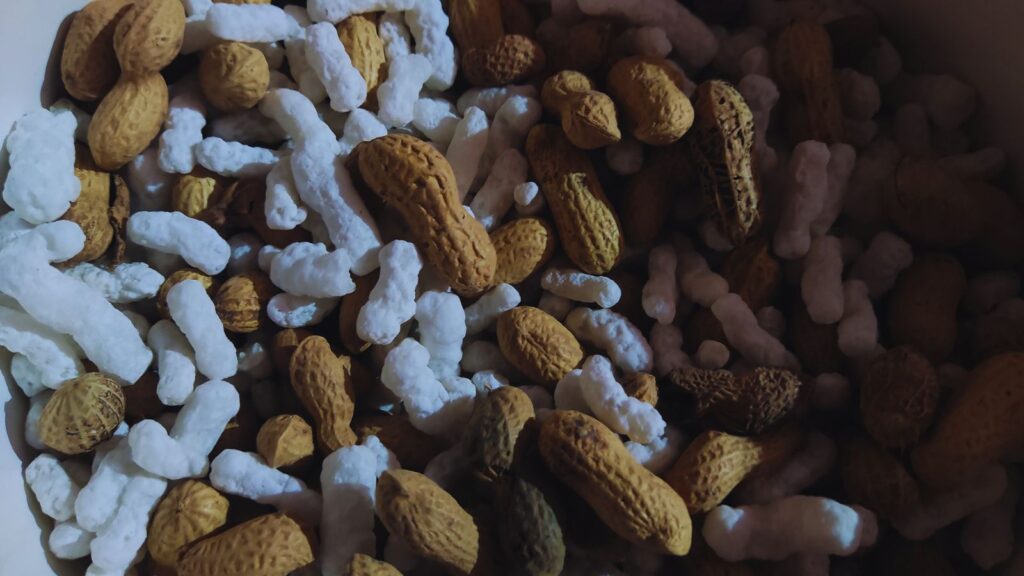
“Jhoob”, aka barley grass, is the main actor for Magh ka Saja in Shilha village. During Magh ka Saja, kids go from different houses to give jhoob and touch the elders’ feet. The elder returns one strand of jhoob with either money or peanuts mixed with a sweet.
When I heard this for the first time, it reminded me of Halloween, when kids go around collecting candies. I woke up early in the morning with the sound of kids going in groups to different houses, carrying small shopping bags. It was a collective, fun activity for them.
I also bought some peanuts and the white sweet in case someone comes here. Generally, they don’t really go to outsiders, aka tourists, for the village functions. They do include us in the festivities, such as feeding us the special dishes and all. But they don’t burden us with their rituals.
Giving Dhoop to the Devata
One consistent ritual I’ve seen for every Sajja is offering Dhoop or incense to the Devata, who is the deity in the village. For this, women wear their traditional outfit, Pattu and go to the temple.
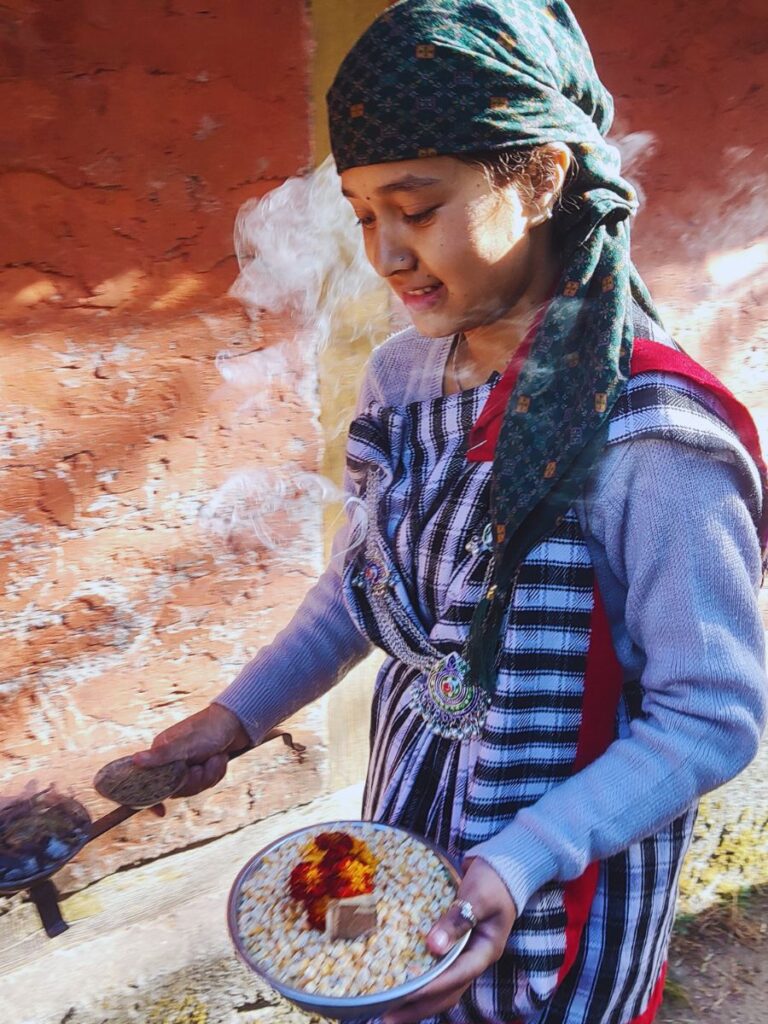
For the young girls, it is a happy time to dress up and also take a lot of pictures and reels afterwards. There is also the nervousness of first-timers about how to do the rituals. With everything happening at a fast pace, it is a busy time with a lot of fast movements.
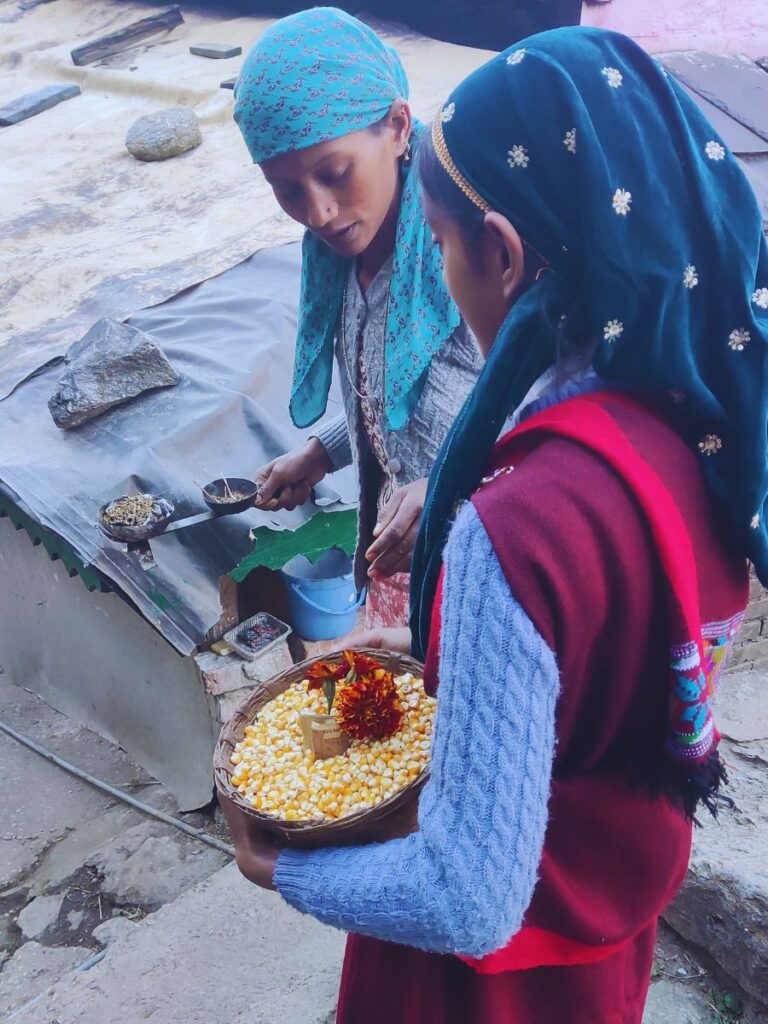
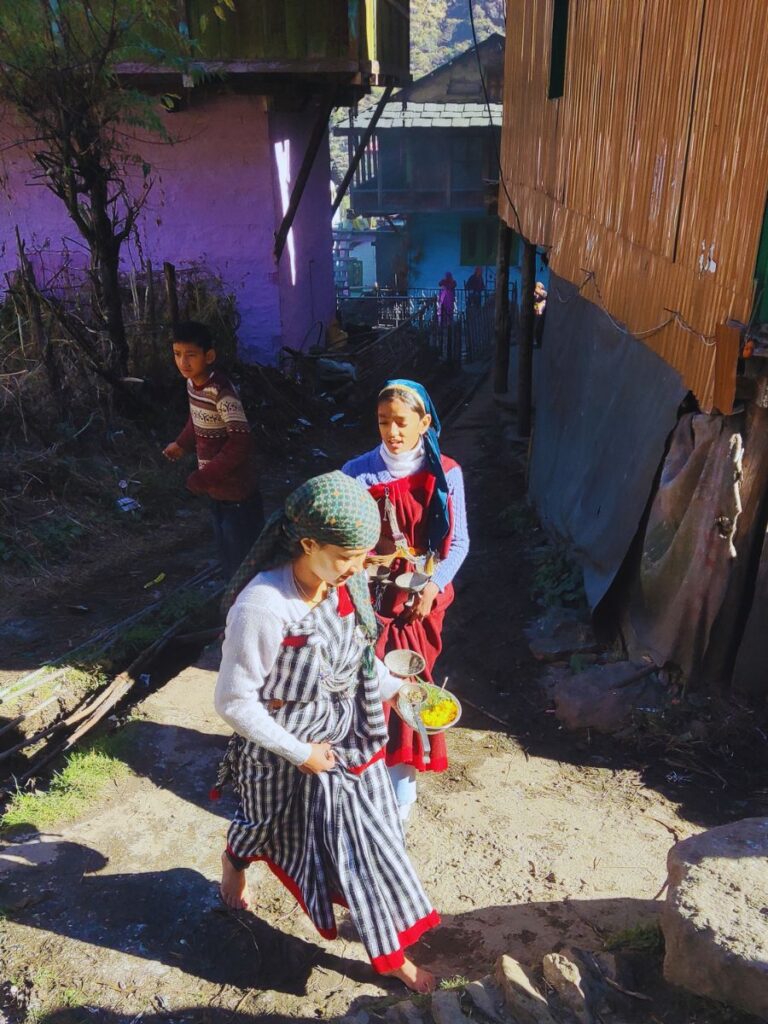
They carry a metal holder in one hand with charcoal in one chamber and put incense in it. They’ll have a basket in their other hand with flowers, and other things which keep changing during the seasons.
This time, it is flowers with jhoob. Last time, it was flowers with corn kennels. They offer these to their Devata in the temple complex. Ladies form a line to perform this ritual. The deity is taken out of the temple and kept outside for this ritual.
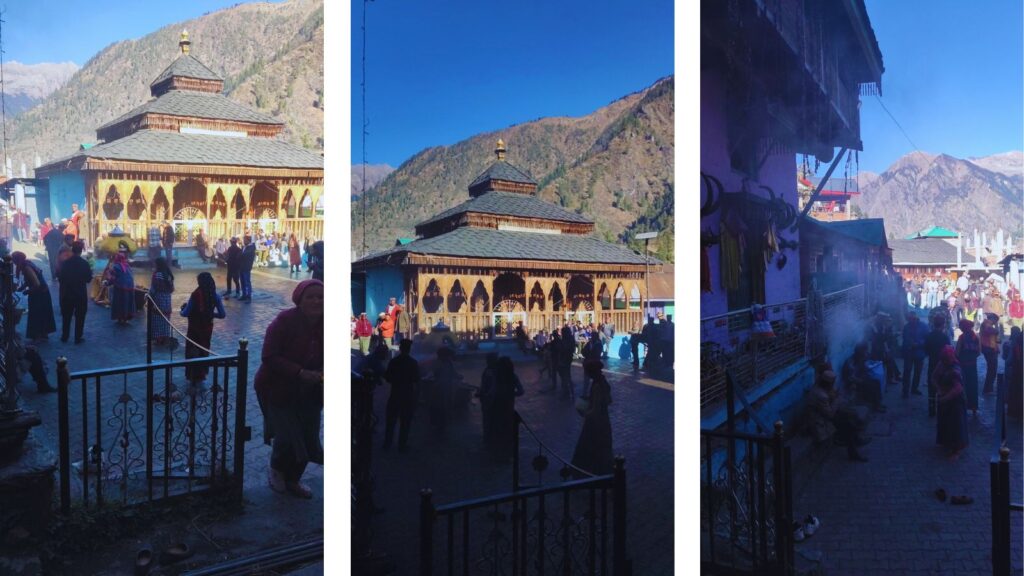
The temple complex is busy with everyone present there during this time. It starts around 8 AM and goes on till 10ish in the morning. With the smoke from the metal holders, flowers and the rituals happening, it is a place where everyone meets and greets for a quick moment.
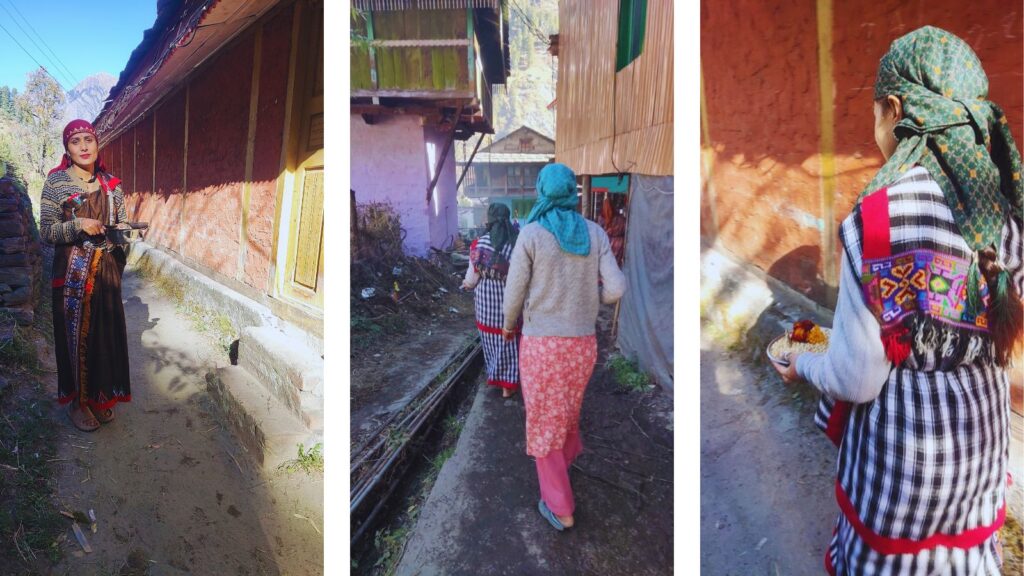
After this, everyone rushes to their houses to get ready for the feast.
Sajja Feast
During every Sajja, every house prepares an elaborate feast for the day. They also expect people to visit homes. So, for Sajjas, women are mostly busy in the kitchen from the day before. Today is the day you get to try local delicacies like Siddu and others.
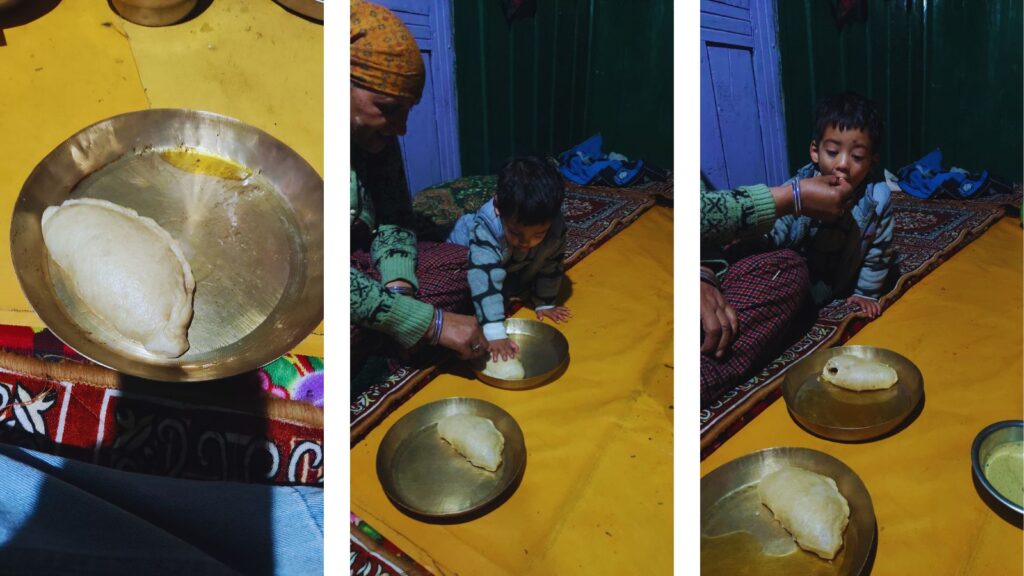
I was also given Siddu and chutneys yesterday. I couldn’t go anywhere since one of my puppies is recovering from Parvo. But they made sure I was included in the festivities by sharing food.
Starting a New Month Clean
The preparation for Sajja starts days before. People clean their homes and surroundings, buy the stationery items for preparing food for guest and so on. So, everyone was busy in the last few days cleaning their houses, including burning their old and unused clothes.
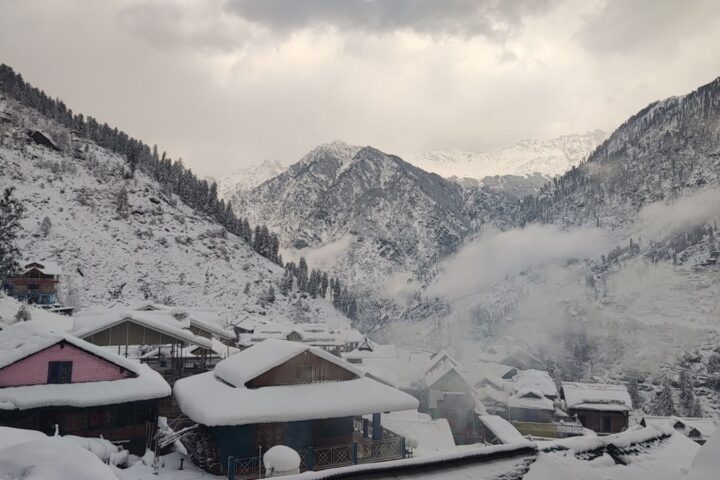
This month is also a celebration of unity during the colder times. Even though it hasn’t snowed yet this year, this is a time with the lowest temperatures in this part of the Himalayas. This is also a time when the villagers warm up their relationships with each other.
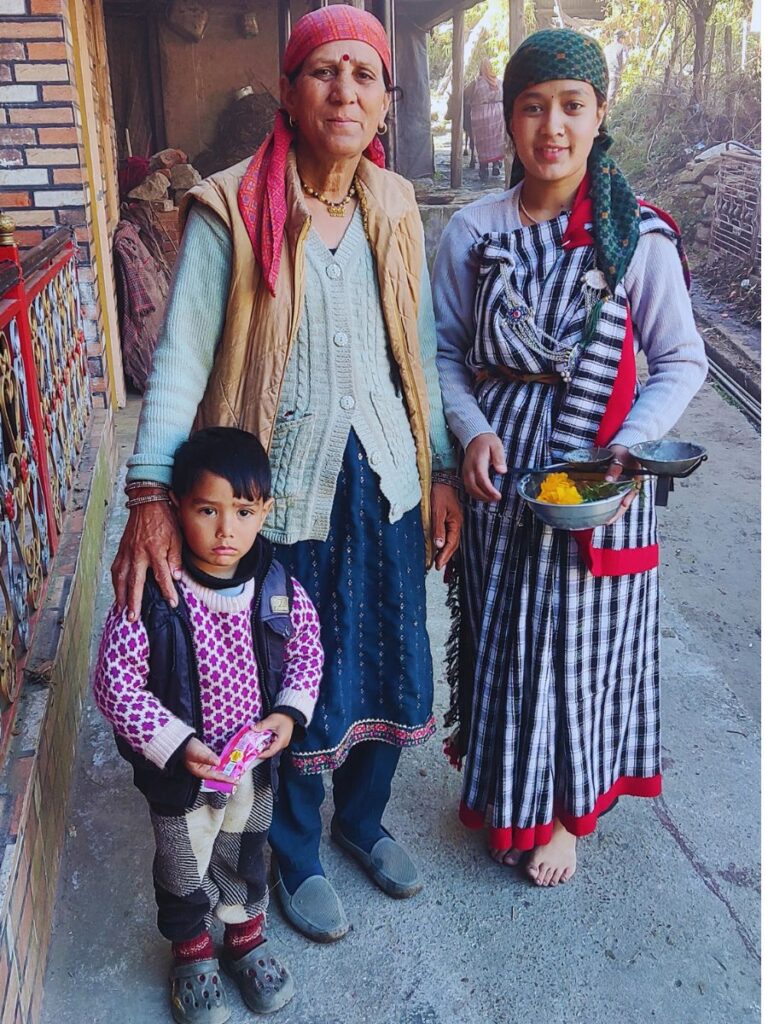
By noon, the village was busy with married ladies going to their own homes with kids, and so many guests visiting Shilha to meet their relatives. The streets were cheerful with people greeting each other and visiting homes.
I went for a walk around the temple and around the village in the evening. The evening scenes were of people having a good time together. Most men gathered outside of their homes, having a drink and conversations. Most women are busy in the kitchen and taking care of their guests.
Tomorrow, a new time of the season starts in literal ways. The school starts for kids after a 15-day break, and everyone is back to their routine jobs to prepare for the winter chores. As for snow, somebody suggested it might start after this sajja day, but that’s yet to be found out.
Topics #Devata concept in Himalayas #Indian mountain life #life in Himalayan villages #Parvati valley #Shilha village #Travel Blog India